Lead Paint Removal in Chula Vista

Chula Vista Lead Paint Removal plans lead paint removal, lead abatement and testing for older houses and apartments in Chula Vista. The city has more of that housing than its newer east side suggests: the 2020-2024 American Community Survey dates 42.4% of local homes to before 1980 and 15.7% to before 1960. Those houses sit mainly west of I-805, in the streets that grew up around the original 1880s tract and the postwar boom.

California splits lead work between two agencies. The California Department of Public Health (CDPH) certifies the people who inspect for lead and the crews who abate it under Title 17, while the EPA certifies renovation firms here because California has no renovation program of its own. A home built in 1978 or later is outside the federal lead paint rules.

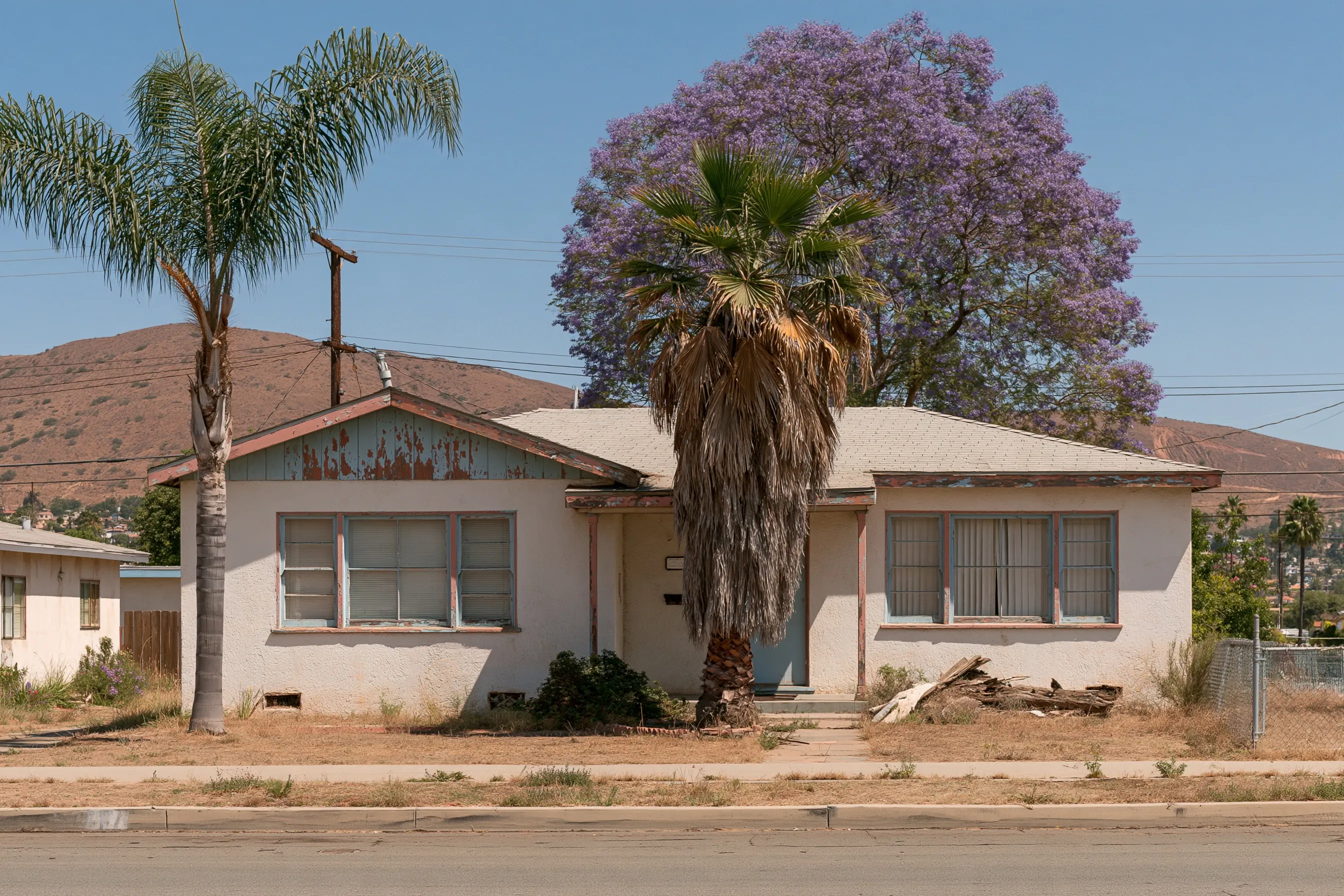
1950s Southern California stucco bungalow with painted wood eaves, trim and windows under palm and jacaranda trees
Lead paint inspection and testingExterior lead paint removalLead paint window and door removalLead-safe renovation and remodelingLead paint encapsulationRental property lead paint work

Lead paint services

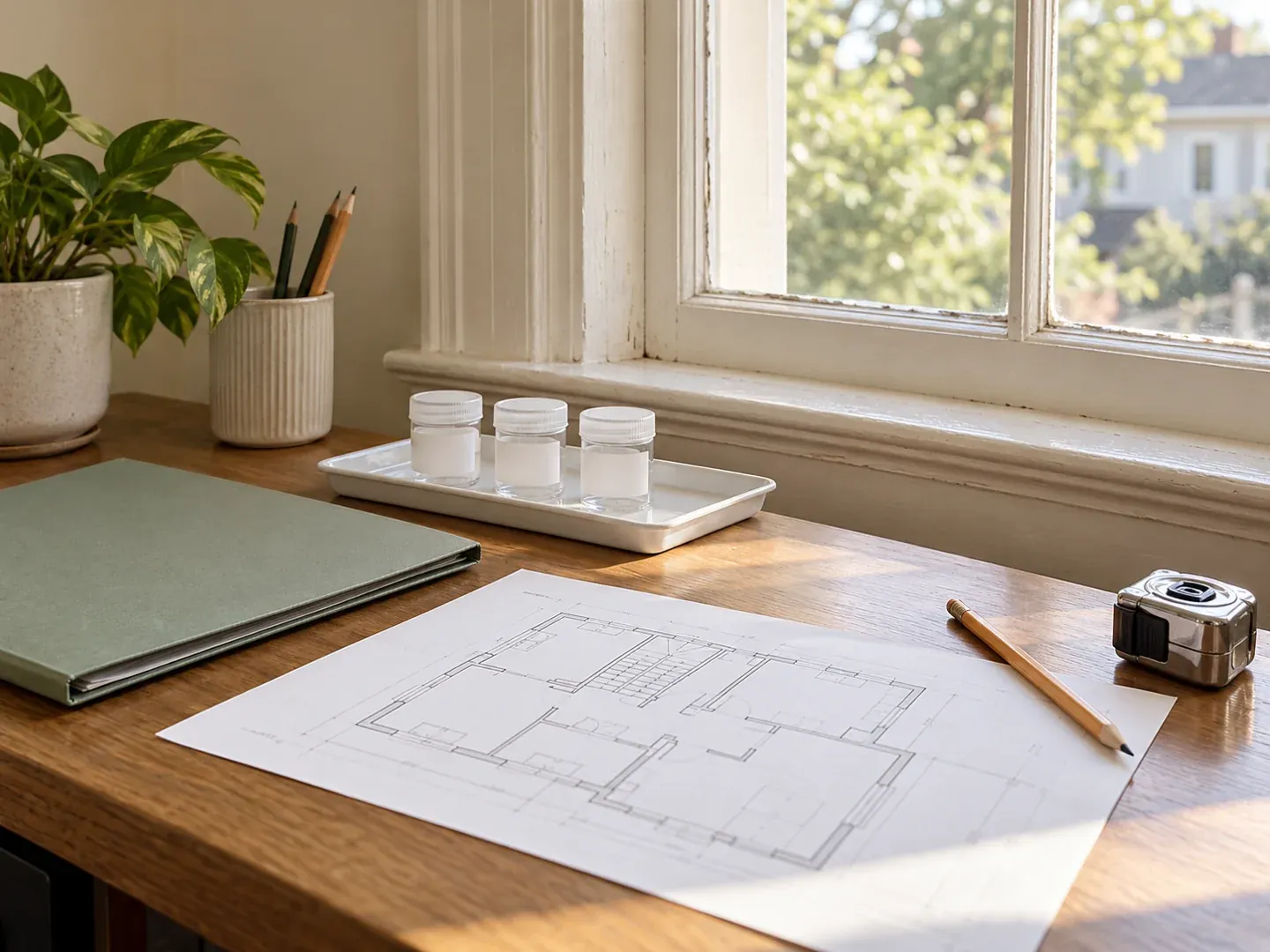
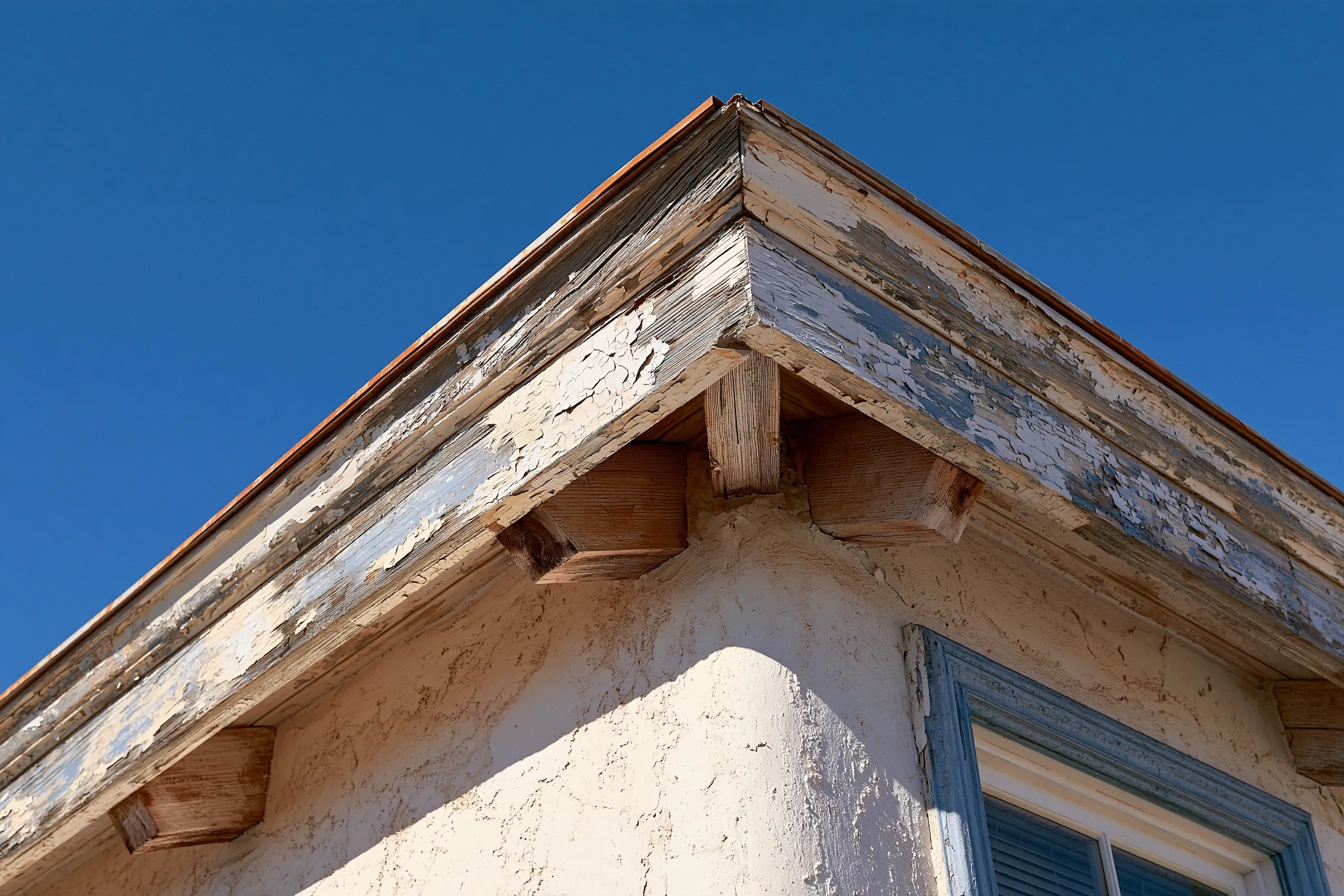
Floor plan, sample containers and a tape measure on a desk beside a painted windowPeeling paint on the wood eaves and fascia of an older stucco house

Lead paint inspection and testing

A paid lead inspection, risk assessment or clearance check in California has to be done by a CDPH-certified Inspector/Assessor. An inspection maps where lead-based paint is; a risk assessment looks for hazards such as peeling paint and lead dust. Each one ends in a report on CDPH Form 8552, and that report decides what, if anything, needs to come off.

Exterior lead paint removal

On a mid-century Chula Vista house the paint to worry about may be on stucco walls, wood eaves, fascia, rafter tails and window trim. Exterior work starts with sheeting on the ground and containment around the wall, because California counts disturbing lead paint without containment as a lead hazard in itself. Abatement crews post a CDPH notice before they begin.

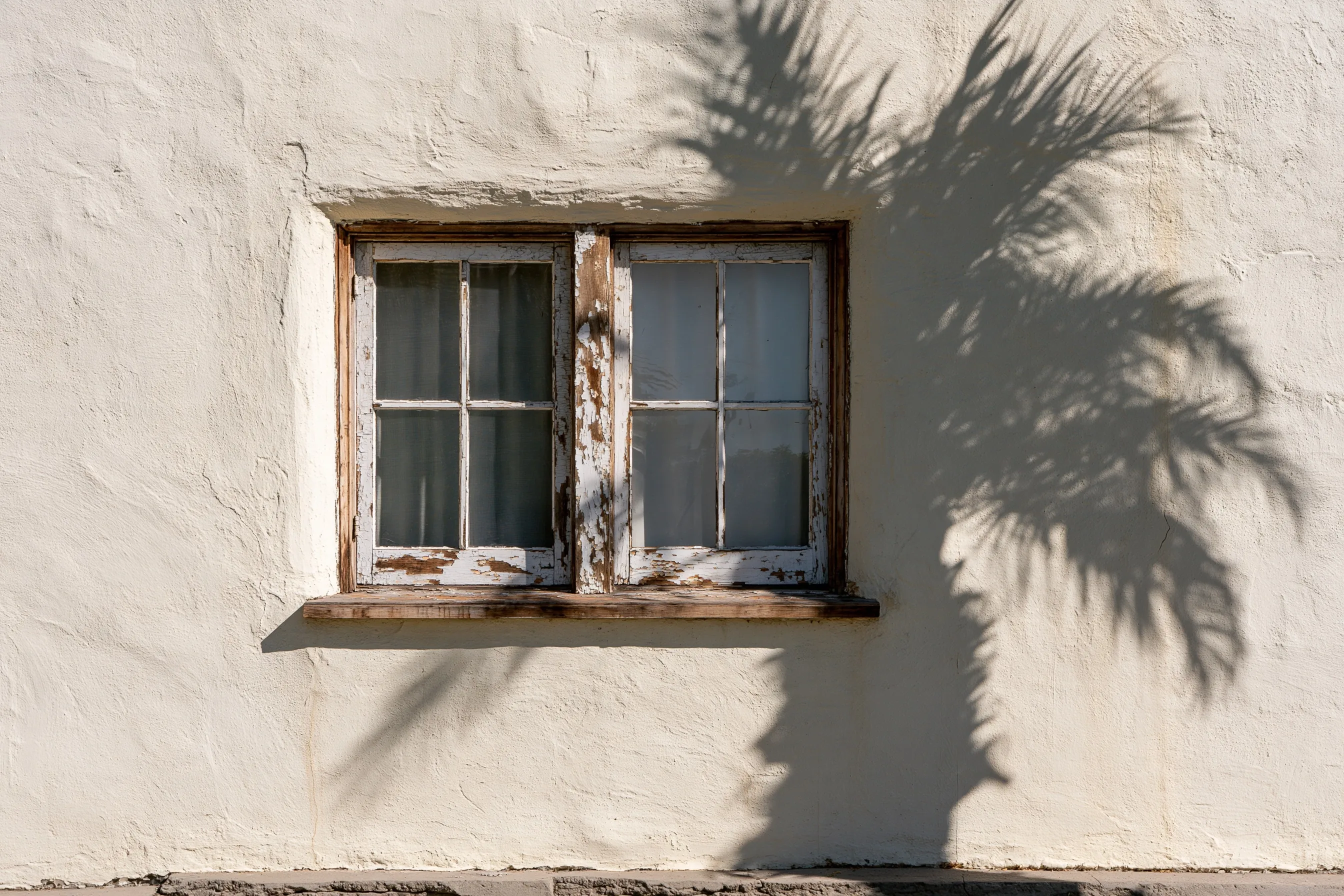
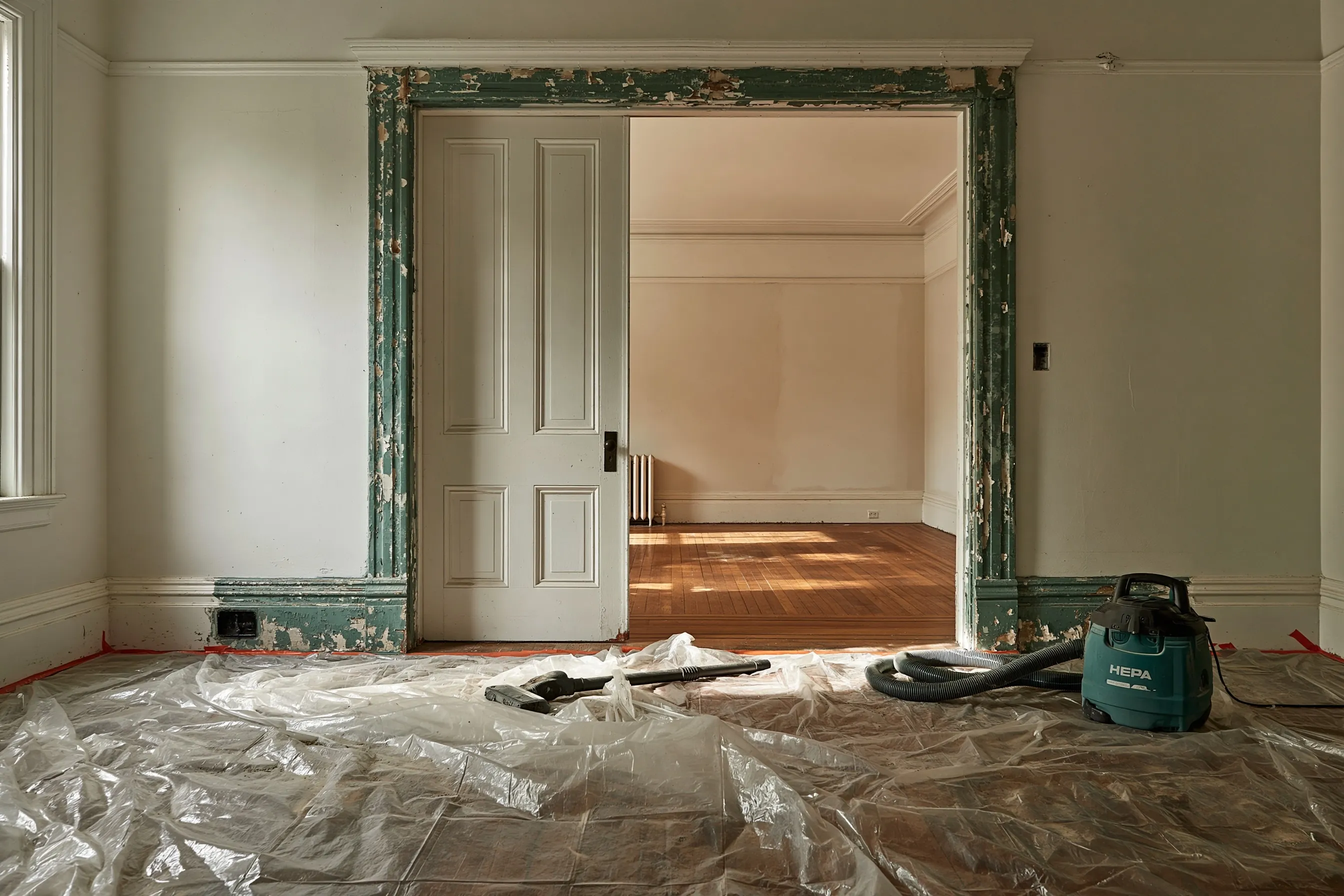
Painted wood windows with flaking paint set in the stucco wall of a 1940s-50s houseInterior door frame and baseboard with layered old paint, room prepared with plastic sheeting

Lead paint window and door removal

Sashes rub in their tracks and doors grind against their jambs, so old paint on them turns to dust faster than paint on a wall. Replacing a window in a pre-1978 home is renovation work under the EPA rule at any size. Stripping and restoring the original sash is the other route, done with the paint contained and the sill cleaned afterward.

Lead-safe renovation and remodeling

Remodeling a pre-1978 kitchen or repainting a bedroom is not abatement, yet it still turns old coats into dust. Because California has no renovation program of its own, EPA rules govern this work here: the firm holds EPA certification, a certified renovator directs the crew, rooms are sealed, and the job ends with a cleaning check. State renovation rules under SB 1076 are still pending at CDPH.

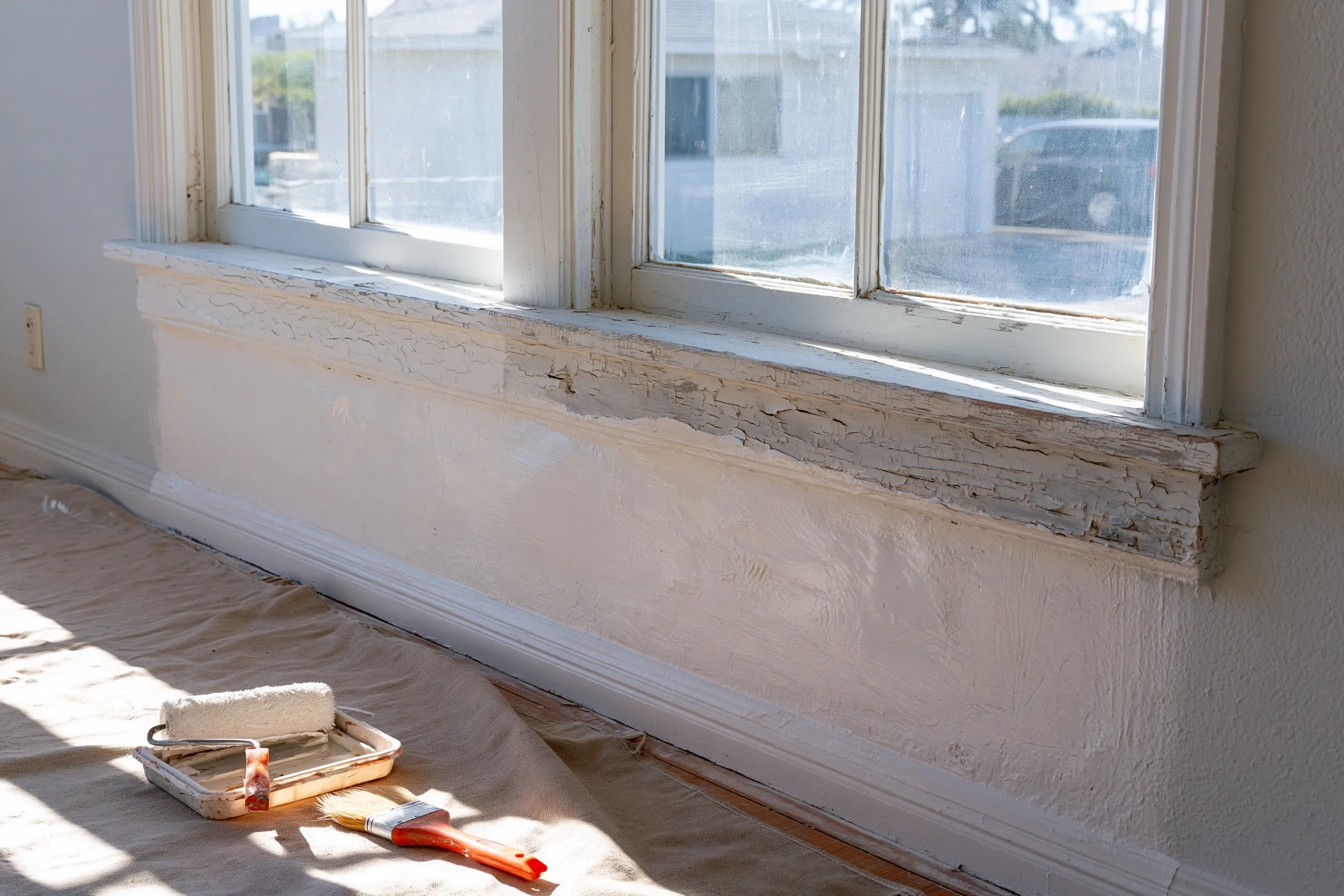
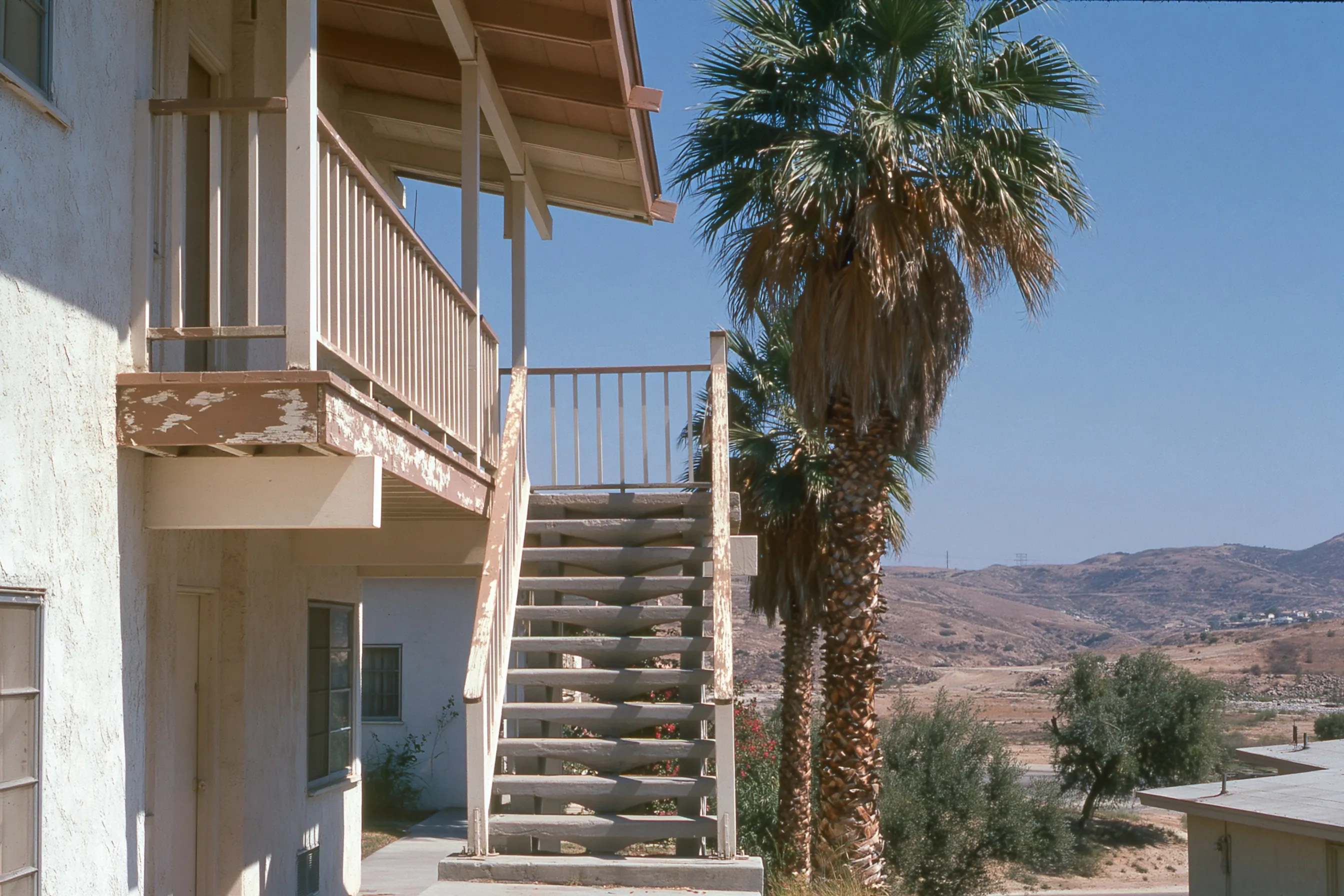
Older painted plaster wall below a cracked painted wood window sill, partly coated with encapsulant paint, tray and brush on a drop clothExterior walkway and concrete stairs of a 1960s two-story stucco apartment building with painted wood railings and trim

Lead paint encapsulation

Paint that is intact and well bonded can sometimes be sealed under a coating or covered with new drywall or panels instead of stripped. Title 17 draws a 20-year line here. A seal designed to last 20 years or more is abatement, done by certified workers with a written plan; anything designed for less is an interim control.

Rental property lead paint work

Landlords of pre-1978 units hand each new or renewing tenant the federal lead disclosure, and paid repainting between tenancies counts as EPA renovation work. California goes further by calling a lead hazard a State Housing Law violation that the local enforcement agency can order corrected. We help owners test units, fix them under lead-safe rules and keep the paperwork.

Lead paint testing and removal costs

Each line is hired labor plus materials and any lab fees for a typical job in Chula Vista and the nearby South Bay cities, one line per job size. A small, easy job sits near the low end. The open top end is for more painted parts, high or detailed eaves, rotten wood found under the paint, or a failed clearance test that means cleaning again.

Lead paint inspection and testing

  • Test of the rooms or parts a project will touch$250 – $550+
  • Whole house up to 2,500 sq ft$300 – $775+
  • Large house over 2,500 sq ft$500 – $1,000+
  • Risk assessment with dust and soil samples, one house$550 – $1,650+
  • Clearance test after lead work$200 – $550+
What is included

Readings or paint chips from each type of painted surface, or dust and soil samples for a risk assessment, and a written report of what tests positive and what does not. Rush reports and extra lab samples cost more.

Get a free quoteSee an example projectAbout this service

Exterior lead paint removal

  • Eaves and fascia on one side, about 100 sq ft$800 – $1,900+
  • Porch and railings, about 150 sq ft$1,400 – $3,600+
  • One-story house, peeling trim, eaves and stucco$5,000 – $13,000+
  • Two-story house$10,000 – $27,500+
What is included

Plastic on the ground and around the wall, loose paint misted and scraped or stripped from eaves, fascia, trim and stucco, waste bagged, primer and paint on the bare wood, and a check for chips and dust at the end. Rotten wood, stucco repair and scaffolding cost extra.

Get a free quoteSee an example projectAbout this service

Lead paint window and door removal

  • One window replaced$375 – $1,150+
  • About 10 windows$3,750 – $11,500+
  • Strip and restore one old window or door, keep the original$550 – $1,650+
What is included

Old windows or doors taken out with plastic inside and out and new units fitted, or the originals stripped, repaired and repainted, then cleanup and a check of the sills. Custom sizes and period doors cost more.

Get a free quoteSee an example projectAbout this service

Lead-safe renovation and remodeling (add-on)

  • Small repair, one room$425 – $1,000+
  • Kitchen or bathroom remodel$1,350 – $3,600+
  • Several rooms or a whole floor$3,300 – $8,600+
What is included

What lead-safe work adds to a remodel, repair or repaint in a pre-1978 home: rooms sealed with plastic, old paint misted before it is disturbed, HEPA vacuuming, cleaning each day and at the end, a cleaning check and waste bagged. The project itself is priced separately.

Get a free quoteSee an example projectAbout this service

Lead paint encapsulation

  • One room's trim and walls sealed, about 300 sq ft$1,200 – $3,300+
  • Several rooms, about 1,000 sq ft sealed$4,000 – $11,000+
  • One room's walls covered with new drywall, about 350 sq ft$2,800 – $6,200+
What is included

Loose paint misted and scraped, then a coating made to seal lead paint over sound walls and trim, or new drywall over the walls. Work meant to last 20 years or more adds a written plan and a clearance test.

Get a free quoteSee an example projectAbout this service

Rental property lead paint work

  • Lead inspection, duplex or small apartment building$700 – $1,650+
  • One unit: peeling paint fixed (about 100 sq ft), cleaned and tested$1,550 – $3,900+
  • One unit: paint fixed and about 8 old windows replaced, with clearance$4,400 – $13,000+
What is included

Testing of a small apartment building, or one unit’s peeling paint repaired the lead-safe way with cleaning and a clearance test. The top line also covers about eight old windows replaced.

Get a free quoteSee an example projectAbout this service

Ranges are 2026 estimates, not quotes. Your written estimate is free and comes after we have seen the home.

Our process

01

Check the build year

Federal rules draw the line at 1978, the year a federal ban stopped lead-based paint being sold for use in homes. Houses finished that year or after carry no disclosure duty and need no certified renovator. For anything older, go by when the original structure went up; a newer kitchen or window set does not change the age of the walls around it.

02

Get a CDPH-certified inspection

Testing is not required before renovation, since the EPA rule simply treats untested pre-1978 paint as lead, but we recommend it before anyone scrapes or demolishes. A CDPH-certified Inspector/Assessor tests the surfaces involved. The inspector cannot be the same party that abates the house, which keeps the findings independent of the removal job.

03

Choose removal, sealing or lead-safe renovation

The report points to one of three paths: permanent abatement that removes or seals the paint for 20 years or more, a shorter-term interim control, or lead-safe renovation that lets an unrelated project go ahead without taking the lead out.

04

Notice, containment and clearance

Abatement needs CDPH Form 8551 posted at the work area and sent to CDPH at least five days ahead. Every lead job uses containment and must leave no visible dust or debris. Permanent abatement then needs a clearance inspection.

Older homes in western Chula Vista

The city’s 2025-2029 Consolidated Plan calls the area north of L Street and east of I-5 Chula Vista’s historic urban core, and describes everything east of I-805 as master-planned communities built from the early 1990s. That split explains the numbers. The San Diego Land and Town Company sold the first five-acre lots in the late 1880s, and when Rohr Aircraft arrived in 1941 the population grew from about 5,000 in 1940 to more than 16,000 by 1950, as houses replaced the lemon groves.

The plan counts 35,100 occupied homes built before 1980, 19,560 owned and 15,540 rented, using 2016-2020 American Community Survey and CHAS data; 15,285 of them had children living there. The newer ACS estimate puts all pre-1980 housing at 38,278 units. Either way, a house in the west-side neighborhoods is worth testing before paint is disturbed.

California rules that apply in Chula Vista

Under California law a building with lead hazards violates the State Housing Law, and local enforcement agencies can order the hazard abated or the work stopped. Title 17 counts disturbing lead paint without containment as a hazard, along with peeling paint and contaminated dust or soil. The city’s Consolidated Plan says Chula Vista code enforcement and building inspectors look for lead paint hazards, and inspectors are alerted to remodeling permits that may involve lead paint.

We have not found a Chula Vista lead paint ordinance, and the City of San Diego’s lead ordinance stops at San Diego’s city limits. For a listed or eligible historic house, the city requires a certificate of appropriateness for alterations that need a building permit, and staff screen homes 45 years or older when a permit is sought.

Chula Vista and nearby South Bay cities

Chula Vista Lead Paint Removal serves Chula Vista, California and two South Bay neighbors with even older housing, each with a page of its own: National City, where about 70% of homes predate 1980, and Imperial Beach, at about 67%.

Frequently asked questions

Who certifies lead inspectors and abatement contractors in California?

CDPH, through its Lead-Related Construction program. It issues five certifications: Inspector/Assessor, Sampling Technician, Project Monitor, Supervisor and Worker. Inspections and risk assessments need an Inspector/Assessor; abatement needs a Supervisor or Worker. CDPH posts monthly lists of currently certified people, with expiration dates, so you can check a name. Renovation firms are certified by the EPA instead.

Do California sellers have to disclose lead paint?

Yes. For a home built before 1978, federal rules require the seller to hand over the EPA lead pamphlet, any known lead reports and a Lead Warning Statement, and to give the buyer 10 days to test. In California that test has to be done by a CDPH-certified Inspector/Assessor. The state’s transfer disclosure statement also asks the seller to disclose known lead-based paint.

What counts as lead-based paint in California?

Title 17 defines it as paint or another surface coating with lead at or above 1.0 milligram per square centimeter, or 0.5% by weight. Paint below that line still contains lead, and sanding it can still make lead dust, so the inspection report lists readings surface by surface rather than giving a single yes or no for the house.

Does the City of San Diego lead ordinance apply in Chula Vista?

No. San Diego Municipal Code section 54.1001 and the programs tied to it apply only inside the City of San Diego. Chula Vista is a separate city. Here the state Title 17 rules, the State Housing Law and the federal EPA rules apply, the same as anywhere else in California.

Can I paint over lead paint?

Sometimes. A purpose-made encapsulant is a coating that bonds to the surface and seals the paint in; ordinary paint is not designed to do that. As a general practice point, sealing suits paint that is still sound on a surface that does not rub or stay wet, and loose paint has to be dealt with first, which itself disturbs lead. An inspection tells you whether sealing is a reasonable choice.

Request a free lead paint removal quote

Tell us where the property is and about when it was built. A line on what you plan to do (repaint, remodel, sell or re-rent) helps, along with who lives there, especially young children, and any lead paperwork you already hold. We'll get back to you soon with an estimate or any questions we have. Estimates are free and there's no obligation.

Call (619) 614-8101

Call (619) 614-8101